Specialised edition developed with advice and guidance from the
Thomas Pocklington Trust
Compatible with:
JAWS and other screen readers
Dolphin SuperNova and other magnification software/hardware
Google and other captioning software
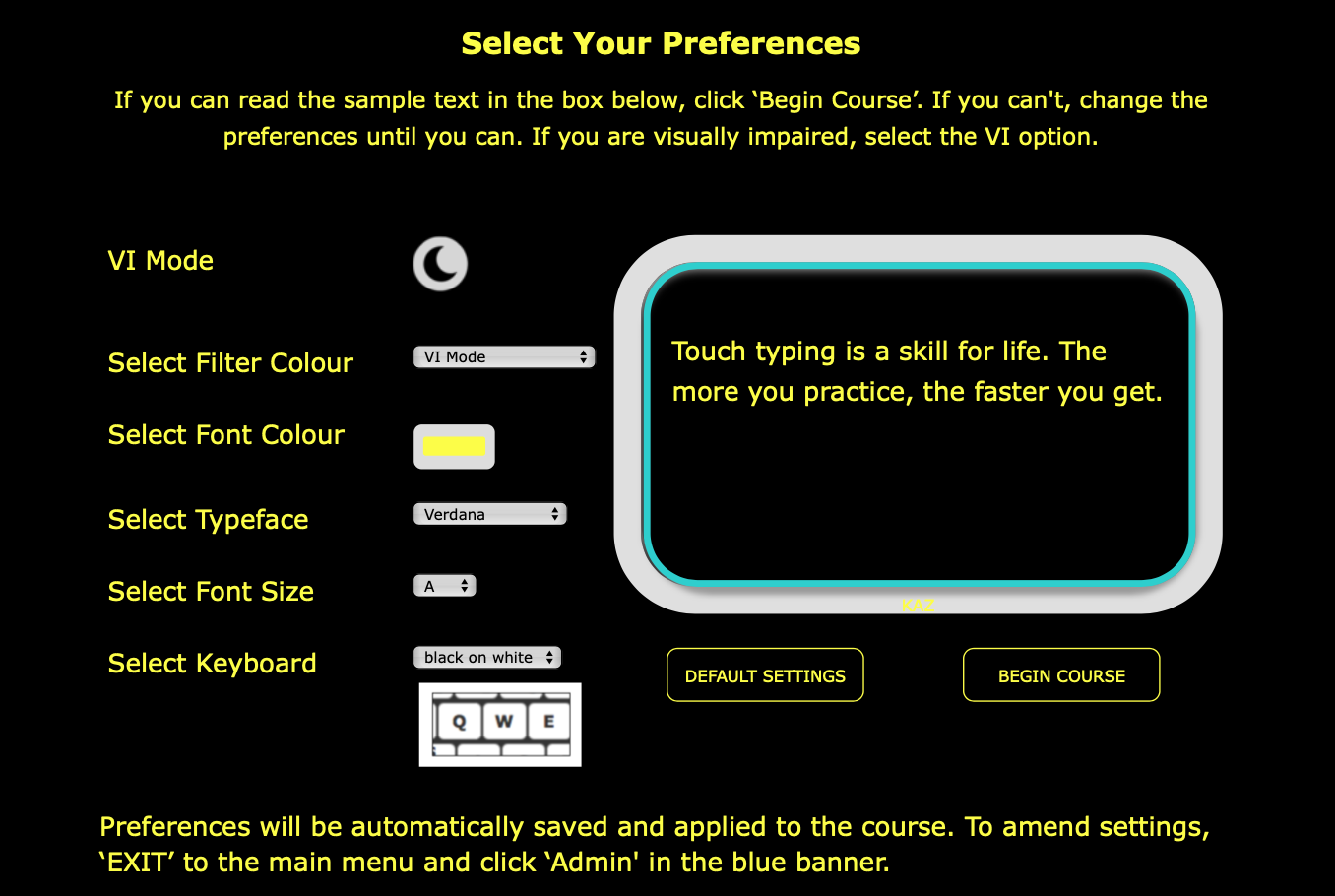
Learning to touch type is considered one of the most beneficial skills for visually impaired and blind individuals. This is because it allows them to transfer their thoughts easily and automatically onto a screen. It provides them with an invaluable tool and asset for independent working and communicating.
Learning to touch type at any age can dramatically boost confidence, self-belief and independence. However, teaching learners with visual impairment at an early age can drastically transform their experience whilst at school and in FE/HE. It puts them on a more even standing with their sighted peers and opens doors to new career opportunities.
Achieving muscle memory and automaticity when touch typing increases efficiency and productivity. However, most importantly, it frees the conscious mind to concentrate on planning, composing, processing and editing, greatly improving the quality of the work produced.
: Long, flat chest with visible ribs and a narrow trunk.
In historical psychological theories, the asthenic type was contrasted with the (muscular) and pyknic (rotund) types.
The asthenic body type is defined by a lack of thickness in muscles and bone structure relative to length. Key features include:
The (also known as the leptosome or leptosomic type ) refers to a specific physical constitution characterized by a slender, fragile, and elongated build. This classification is most prominently associated with Ernst Kretschmer , a 20th-century German psychiatrist who theorized that physical build is linked to personality and mental health. Physical Characteristics
: Thin, long arms and legs with delicate bone structures in the hands. Shoulders : Narrow and often drooping.
: Generally falls significantly below the average for the individual's height. Psychological & Clinical Associations
: Often described as having a "bird-like" or long, thin appearance.
Type: Asthenic
: Long, flat chest with visible ribs and a narrow trunk.
In historical psychological theories, the asthenic type was contrasted with the (muscular) and pyknic (rotund) types.
The asthenic body type is defined by a lack of thickness in muscles and bone structure relative to length. Key features include:
The (also known as the leptosome or leptosomic type ) refers to a specific physical constitution characterized by a slender, fragile, and elongated build. This classification is most prominently associated with Ernst Kretschmer , a 20th-century German psychiatrist who theorized that physical build is linked to personality and mental health. Physical Characteristics
: Thin, long arms and legs with delicate bone structures in the hands. Shoulders : Narrow and often drooping.
: Generally falls significantly below the average for the individual's height. Psychological & Clinical Associations
: Often described as having a "bird-like" or long, thin appearance.