City:
Kyiv
Dnipro
Lviv
Odesa
Mykolaiv
Kharkiv
Khmelnytskyi
Zhytomyr
Kryvyi Rih
Chernihiv
Poltava
Uzhhorod
Lutsk
Cherkasy
Cinema:
Lavina IMAX Laser
ul. Berkovetskaya, 6D
 Session schedule
Respublika Park IMAX
Kol'tsevaya doroga, 1
Session schedule
Retroville ScreenX
Session schedule
Prospekt
vul. Hnata Khotkevycha, 1V
Session schedule
Atmosfera
Stolychne shose, 103
Session schedule
Karavan Outlet
vul. Luhova, 12
Session schedule
Komod
vul. Sheptytskoho, 4A
Session schedule
TSUM
ul. Khreshchatyk, 38, Kyiv
Session schedule
Cinema:
Karavan
ul. Nizhnedneprovskaya, 17
Session schedule
Dafi IMAX
bul. Zvezdny, 1A
Session schedule
Cinema:
Victoria Gardens
ul. Kul'parkovska, 226 A
Session schedule
Spartak
ul. Het'mana Mazepy, 1B
Session schedule
Cinema:
Gagarinn Plaza
ul. Genueskaya, 5/2
Session schedule
Riviera ScreenX
Yuzhnaya doroga, 101A, Odeska oblast
Session schedule
Cinema:
City Center
prospekt Tsentralny, 98
Session schedule
Cinema:
Oasis
ul. Stepana Bandery, 2A
Session schedule
Cinema:
Global UA
ul. Kiyevskaya, 77
Session schedule
Cinema:
Victory Plaza
prospekt Tsentralnyi, 37
Session schedule
Cinema:
Hollywood
Levka Lukyanenko Avenue, 74
Session schedule
Cinema:
Equator
ul. Kovpaka, 26
Session schedule
Cinema:
Pannonia
pl. Poshtova, 4a
Session schedule
Cinema:
Promin
prospekt Hrushevskoho, 2
Session schedule
Cinema:
Liubava
bul. Shevchenko, 208/1
Session schedule
Dnipro Plaza
ul. Priportova, 34
Session schedule

Looks like you're somewhere in a galaxy far, far away or Middle-earth :)
Please choose
Your city and cinema
Address SkyMall
Looks like you're somewhere in a galaxy far, far away or Middle-earth :)
Please choose
Your city and cinema
Choose

Your order will be canceled
However, these seats will be unavailable for 15 minutes



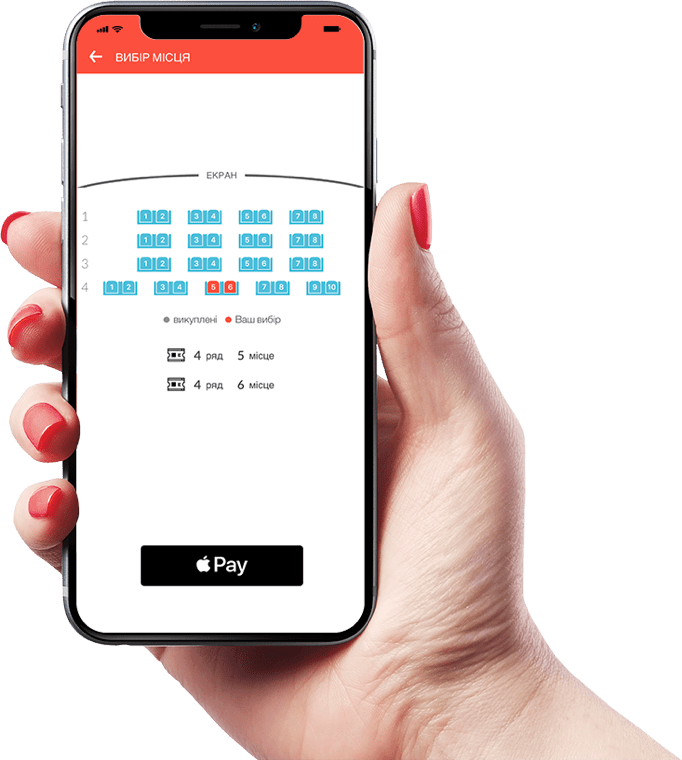
Pay with Apple Pay
in the Multiplex app -
get free popcorn!
More details* For PrivatBank cardholders
: These are considered the finest cycle of quartets since Beethoven, tracing his development from Romanticism to intense Modernism. Final Years and Legacy
: His work preserved a vast heritage of oral tradition that was rapidly disappearing due to industrialization and war. Major Works BГ©la BartГіk
: Often cited as his masterpiece, showcasing his use of symmetry and "night music" textures. : These are considered the finest cycle of
Béla Bartók (1881–1945) was a Hungarian composer, pianist, and ethnomusicologist who stands as one of the most influential figures of 20th-century music. He is celebrated for his unique synthesis of Eastern European folk music with the rigorous structures of Western classical tradition, a style that fundamentally reshaped modern musical language. Musical Style and Innovation distinctive harmonic language
Forced to flee Europe in 1940 due to the rise of Nazism, Bartók spent his final years in New York City. Despite struggling with poor health and financial instability, he produced some of his most accessible and profound music before his death from leukemia in 1945. Today, his influence persists in the works of countless composers and the continues to be a staple of the global concert repertoire.
Bartók’s music is characterized by its rhythmic complexity, distinctive harmonic language, and structural precision. Unlike many of his contemporaries who looked toward abstraction, Bartók grounded his work in the "organic" sounds of the earth.
: While often dissonant, his work rarely abandoned tonality entirely. He frequently used "axis tonality" and modes derived from folk music rather than traditional major/minor scales.