Deftones Вђ“ This Place Is Death (official Visualizer) -

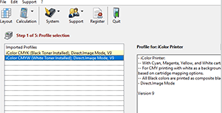
DTF Pro™ has developed a series of software packages to enhance your IColor printing experience. The DTF Pro™ TransferRIP and ProRIP and ProRIP Essentials packages make it simple to produce spot color overprint and underprint in one pass. The Absolute White RIP helps you use an Absolute White Toner Cartridge in a converted CMYK printer, and create 2 pass prints with color and white. The DTF Pro™ SmartCUT suite allows your A4/Letter sized printer to produce tabloid or larger sized transfers! Use one or more with the DTF Pro™ 500, 600 and 800 series of transfer printers.
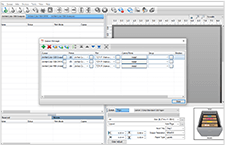
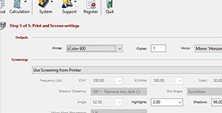
Use the DTF Pro™ ProRIP software to print white as an underprint or overprint in one pass.
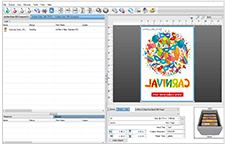
This professional version is designed for higher volume printing with an all new interface. Design files can be printed directly from your favorite graphics program, as well as imported directly into DTF Pro™ ProRIP. Deftones – This Place Is Death (Official Visualizer)
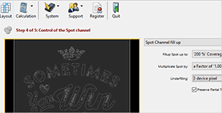
The DTF Pro™ ProRIP software allows the user to control the spot white channel feature. Three cartridge configurations are available: Spot color overprinting, where white is needed as a top color for textiles; Spot color underprinting for printing on dark or transparent media where white is needed as a background color and standard CMYK printing where a spot color is not needed. No need to create additional graphics with different color configurations – the software does it all – and in one pass! Enhance the brilliance of any graphic with white behind color! Ultimately, "This Place Is Death" is more than
Compatible with Microsoft Windows® 8 / 10 / 11 (x32 & x64) only. Written in the wake of bassist Chi Cheng’s
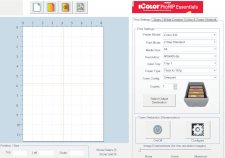
A simplified version of ProRIP which includes all of the most commonly used features of ProRIP with an easy to use interface. This Essentials version simplifies the printing process and allows the user to print efficiently and quickly without any training. All of the important and frequently used aspects of the software are included in this version, while all of the ‘never used’ or confusing aspects of the software are left out.
Comes standard with the IColor®540 and 560 models and is compatible with the IColor 550 as well.
Does not work with IColor 500, 600, 650 or 800 (yet).
Improvements over the ‘Standard’ ProRIP:
Ultimately, "This Place Is Death" is more than a album closer; it is a sonic environment. It encapsulates the Deftones’ legacy: the marriage of crushing weight and delicate grace, proving that even in the darkest "places," there is a profound sense of light.
The Atmospheric Void: An Analysis of "This Place Is Death" Closing out Deftones’ career-defining 2010 album Diamond Eyes , "This Place Is Death" serves as a haunting, ethereal capstone to a project born from tragedy. Written in the wake of bassist Chi Cheng’s devastating accident, the song—and its official visualizer—captures the band's unique ability to find beauty within morbid transitions.
The official visualizer mirrors this sensory overload. Rather than a narrative music video, it uses abstract, kaleidoscopic imagery and shifting light to evoke a sense of disorientation. The visuals lean into the "Diamond Eyes" motif—high contrast, shimmering textures, and a surrealist flow. It focuses on the feeling of the music rather than a literal interpretation, reflecting the song’s status as a transitional piece of art.
Lyrically and tonally, the song explores the concept of "The In-Between." It posits that love can exist even when the physical world is dissolving. By titling the track "This Place Is Death" but filling it with such lush, vibrant melody, Deftones suggest that the end of things is simply a different kind of beginning. It is an invitation to stay present even when the surroundings are crumbling.
The track is a masterclass in the "loud-quiet-loud" dynamic, but filtered through a dream-pop lens. Stephen Carpenter’s guitars aren't just heavy; they are textured and oceanic, creating a wall of sound that feels like being submerged. Chino Moreno’s vocals fluctuate between a breathy, romantic whisper and an agonizing, desperate cry. The juxtaposition of the romantic lyrics—"I’ll reach out to you / Just to know you're there"—against the title’s bleakness suggests that "death" isn't an ending, but a shared space of intimacy.
Ultimately, "This Place Is Death" is more than a album closer; it is a sonic environment. It encapsulates the Deftones’ legacy: the marriage of crushing weight and delicate grace, proving that even in the darkest "places," there is a profound sense of light.
The Atmospheric Void: An Analysis of "This Place Is Death" Closing out Deftones’ career-defining 2010 album Diamond Eyes , "This Place Is Death" serves as a haunting, ethereal capstone to a project born from tragedy. Written in the wake of bassist Chi Cheng’s devastating accident, the song—and its official visualizer—captures the band's unique ability to find beauty within morbid transitions.
The official visualizer mirrors this sensory overload. Rather than a narrative music video, it uses abstract, kaleidoscopic imagery and shifting light to evoke a sense of disorientation. The visuals lean into the "Diamond Eyes" motif—high contrast, shimmering textures, and a surrealist flow. It focuses on the feeling of the music rather than a literal interpretation, reflecting the song’s status as a transitional piece of art.
Lyrically and tonally, the song explores the concept of "The In-Between." It posits that love can exist even when the physical world is dissolving. By titling the track "This Place Is Death" but filling it with such lush, vibrant melody, Deftones suggest that the end of things is simply a different kind of beginning. It is an invitation to stay present even when the surroundings are crumbling.
The track is a masterclass in the "loud-quiet-loud" dynamic, but filtered through a dream-pop lens. Stephen Carpenter’s guitars aren't just heavy; they are textured and oceanic, creating a wall of sound that feels like being submerged. Chino Moreno’s vocals fluctuate between a breathy, romantic whisper and an agonizing, desperate cry. The juxtaposition of the romantic lyrics—"I’ll reach out to you / Just to know you're there"—against the title’s bleakness suggests that "death" isn't an ending, but a shared space of intimacy.
Use the DTF Pro™ TransferRIP software to print white as an underprint or overprint in one pass.
Designed for every day, short to mid run use, the DTF Pro™ TransferRIP software allows the user to control the spot white channel feature. Two cartridge configurations are available: White overprint, where white is needed as a top color for textiles; and white underprint for printing on dark or transparent media where white is needed a round color. No need to create additional graphics with different color configurations – the software does it all – and in one pass! Enhance the brilliance of any graphic with white behind color!
Compatible with Microsoft Windows 7 / 8 / 10 (x32 & x64) only.