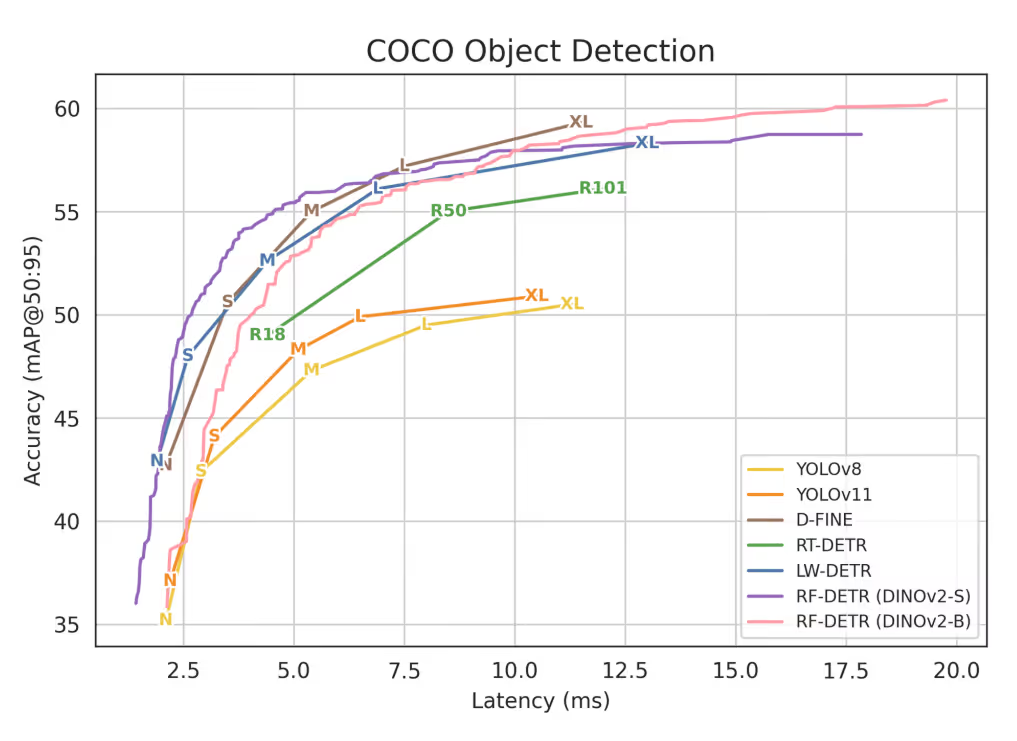
YOLOv8 is a computer vision model architecture developed by Ultralytics, the creators of YOLOv5. You can deploy YOLOv8 models on a wide range of devices, including NVIDIA Jetson, NVIDIA GPUs, and macOS systems with Roboflow Inference, an open source Python package for running vision models.
In the early days, R used what was known as the . Imagine a blank digital canvas called a graphics device . To tell a story, R would "paint" elements one by one.
Once upon a time, in the kingdom of Data, there was a versatile artisan named R. While R was known for many skills, its greatest pride was the ability to paint stories through data visualization. The story of R Graphics is one of layers, evolution, and a philosophy that transformed raw numbers into art. The "Painters Model"
The true revolution came with a new philosophy: the , embodied by the famous ggplot2 . Instead of just painting, R began to build plots like sentences.
As the kingdom grew more complex, the data did too. Simple plots weren't enough to show multi-dimensional relationships. Enter the . Inspired by the "Trellis" style, Lattice allowed R to create multi-panel plots that could show different facets of data side-by-side automatically. It made big decisions for the user—like spacing and margins—so the storyteller could focus on the patterns rather than the plumbing. The Grammar of Graphics
In the early days, R used what was known as the . Imagine a blank digital canvas called a graphics device . To tell a story, R would "paint" elements one by one.
Once upon a time, in the kingdom of Data, there was a versatile artisan named R. While R was known for many skills, its greatest pride was the ability to paint stories through data visualization. The story of R Graphics is one of layers, evolution, and a philosophy that transformed raw numbers into art. The "Painters Model"
The true revolution came with a new philosophy: the , embodied by the famous ggplot2 . Instead of just painting, R began to build plots like sentences.
As the kingdom grew more complex, the data did too. Simple plots weren't enough to show multi-dimensional relationships. Enter the . Inspired by the "Trellis" style, Lattice allowed R to create multi-panel plots that could show different facets of data side-by-side automatically. It made big decisions for the user—like spacing and margins—so the storyteller could focus on the patterns rather than the plumbing. The Grammar of Graphics
You can train a YOLOv8 model using the Ultralytics command line interface.
To train a model, install Ultralytics:
Then, use the following command to train your model:
Replace data with the name of your YOLOv8-formatted dataset. Learn more about the YOLOv8 format.
You can then test your model on images in your test dataset with the following command:
Once you have a model, you can deploy it with Roboflow.
YOLOv8 comes with both architectural and developer experience improvements.
Compared to YOLOv8's predecessor, YOLOv5, YOLOv8 comes with: R Graphics
Furthermore, YOLOv8 comes with changes to improve developer experience with the model. In the early days, R used what was known as the