
CONTENT CARD
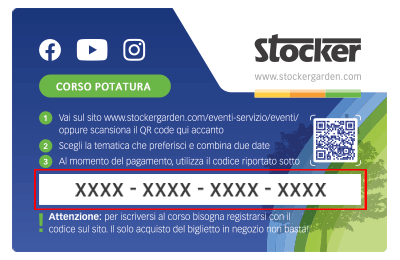
Le Content Card sono i biglietti dei corsi che puoi trovare e acquistare direttamente nei negozi e nelle rivendite agrarie. Ciascuna Card ha un codice da riportare nel riquadro sottostante per confermare la tua iscrizone al corso, dopo averlo già acquistato in negozio.
Se hai già una Content Card, il codice da inserire è evidenziato nel rettangolo rosso di esempio.
Se invece non hai una Content Card, puoi acquistare il corso direttamente qui sul sito scegliendo l’opzione Carta Prepagata.
CARTA PREPAGATA
Se non hai già acquistato in negozio una Content Card per i corsi di potatura, non preoccuparti! Puoi comprare il corso direttamente qui! Una volta completato il modulo di iscrizione potrai procedere al pagamento. I metodi di pagamento accettati sono: carta di credito, carta prepagata. Non è possibile pagare con bonifico bancario e con carta Postepay.
Sile Dorel-hora Lui Sile Dorel 【PROVEN】
: The track blends traditional folk foundations with the modern, amplified sound of the Manele movement [1]. It features the rapid-fire accordion runs that Sile Dorel is known for, often mimicking the phrasing of a vocal soloist.
Sile Dorel is regarded as a master of the accordion, often cited alongside other greats like Vasile Pandelescu or Ionică Minune. His "Hora" remains a study piece for aspiring accordionists due to its:
In Romanian music culture, a "Hora lui [Artist Name]" is a high honor. It signifies that a particular melody or arrangement has become so synonymous with a performer's skill that it serves as their musical signature. Sile Dorel-Hora lui Sile Dorel
: Sile Dorel belongs to the lăutari —a class of professional musicians who historically performed at weddings and communal celebrations.
: The clarity of individual notes at high speeds. : The track blends traditional folk foundations with
: The use of Balkan-inflected scales that give the music its "oriental" soul.
"Hora lui Sile Dorel" is a prominent instrumental track within the Romanian and Lăutărească genres, showcasing the technical virtuosity of the accordionist Sile Dorel . As a "horă"—a traditional Romanian circle dance—the piece is characterized by its high energy, complex ornamentation, and driving rhythmic structure. Musical Style and Composition His "Hora" remains a study piece for aspiring
: While the accordion is the lead voice, the track is typically supported by a "țambal" (hammered dulcimer), bass, and modern percussion or drum machines, creating a bridge between old-world lăutar traditions and contemporary party music. Cultural Context