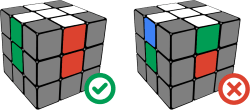

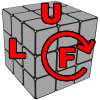
 I used capital letters to mark the clockwise face rotations: F (front), R (right), L (left), U (up), D (down).
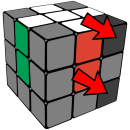 When the white edges are solved we can move on to solve the white corners.
 twisting the corner in each step. Using this trick you can solve each white corner in less than 6 iterations.
 When a center layer piece is in its correct position, but oriented incorrectly then use the same algorithm to take it out, inserting another piece to replace it temporarily.
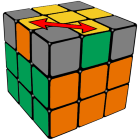
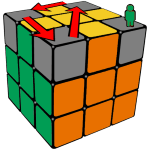
 1. Hold the cube in your hand having an unsolved yellow corner in the highlighted top-right-front position.
 Will - Trent - Season 1eps6
The episode is replete with symbolism, with various motifs and themes woven throughout the narrative. The use of lighting, camera angles, and music effectively reinforce the show's atmospheric tension, underscoring the emotional intensity of the characters' experiences.
This episode expertly exposes the vulnerability and emotional depth of its characters, particularly Will, whose troubled past and present converge in unexpected ways. As Will navigates his investigation, he must also confront his own emotional baggage, revealing the scars that still linger from his tumultuous childhood. Will Trent - Season 1Eps6
The sixth episode of the first season of the ABC drama series Will Trent, based on the novel by Karin Slaughter, continues to explore the complexities of human relationships, delving deeper into the lives of the characters and their entangled pasts. This episode, like the others in the series, masterfully weaves together themes of trauma, redemption, and the power of human connection. This essay will examine the pivotal events and character developments in Will Trent - Season 1, Episode 6, highlighting the show's thought-provoking portrayal of human relationships. The episode is replete with symbolism, with various
Will's relationships with those around him - including his love interest, Neveah, and his adversary, Ana Riveria - illustrate the redemptive power of human connection. Through these interactions, the show underscores the idea that people are multifaceted, capable of both good and evil, and that understanding and empathy can be powerful tools in bridging the gaps between individuals. As Will navigates his investigation, he must also
One notable theme present in this episode is the tension between truth and deception. As Will digs deeper into the mystery, he must navigate a complex web of lies and half-truths, confronting the darker aspects of human nature. This theme serves as a microcosm for the broader exploration of human relationships, highlighting the difficulties of communication and understanding in a world where truth is often subjective.